
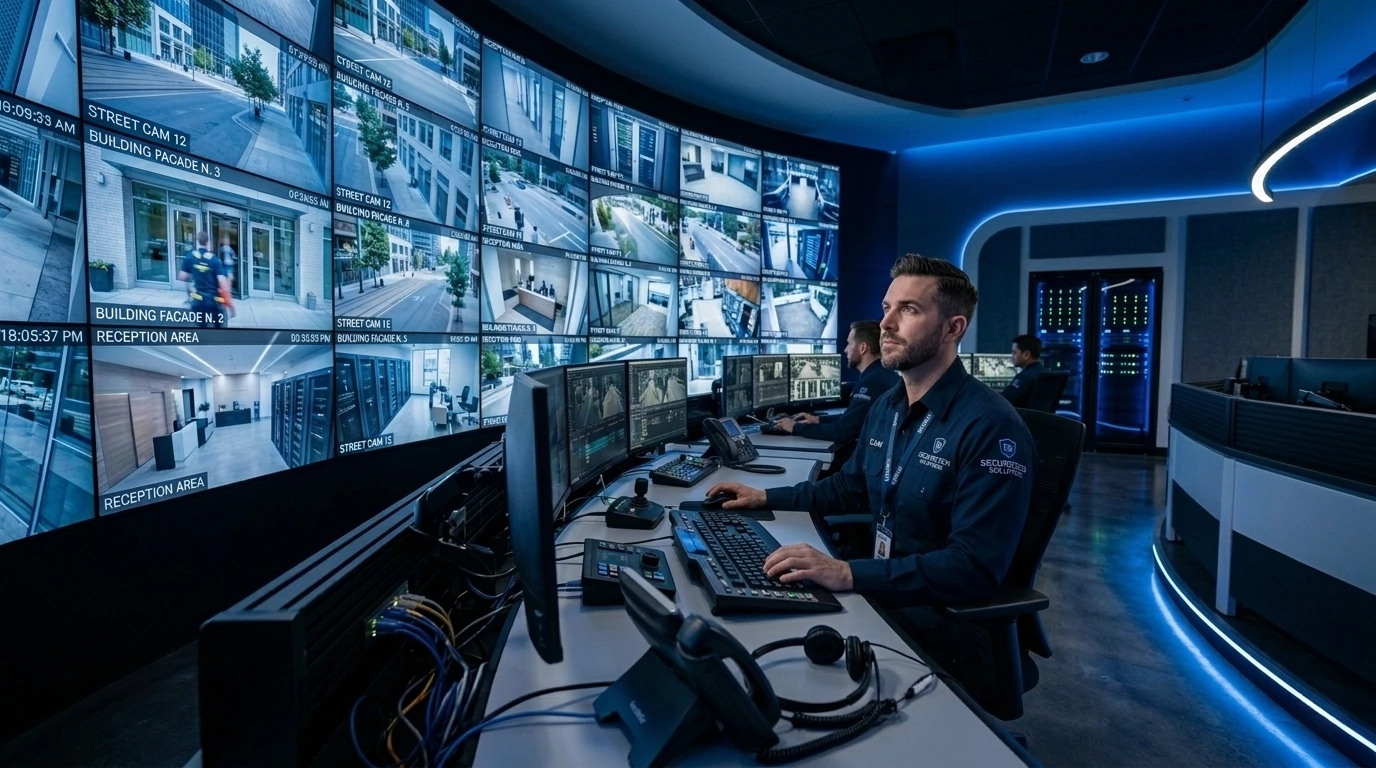
CCTV Camera Installation in Egypt — System Design, Installation & Integration
SISCOM provides CCTV installation in Egypt for commercial, industrial, and institutional facilities. As a CCTV installation company in Egypt, we cover camera placement planning, recording and storage sizing, network infrastructure, installation, commissioning, and integration with existing access control where applicable.
System scope is defined after reviewing the site and the required surveillance objectives.
What Is CCTV Installation?
CCTV installation is the process of designing, supplying, mounting, and configuring security cameras, recorders (NVR or DVR), storage devices, and monitoring software to provide live surveillance and recorded video for a facility.
A complete installation is more than mounting cameras. It involves deciding where each camera should be placed, what lens and resolution suit the scene, how video is transmitted and stored, and how the system is accessed and maintained over time. The same principles apply whether the project is a small office or a commercial CCTV installation across multiple sites.
Our Work
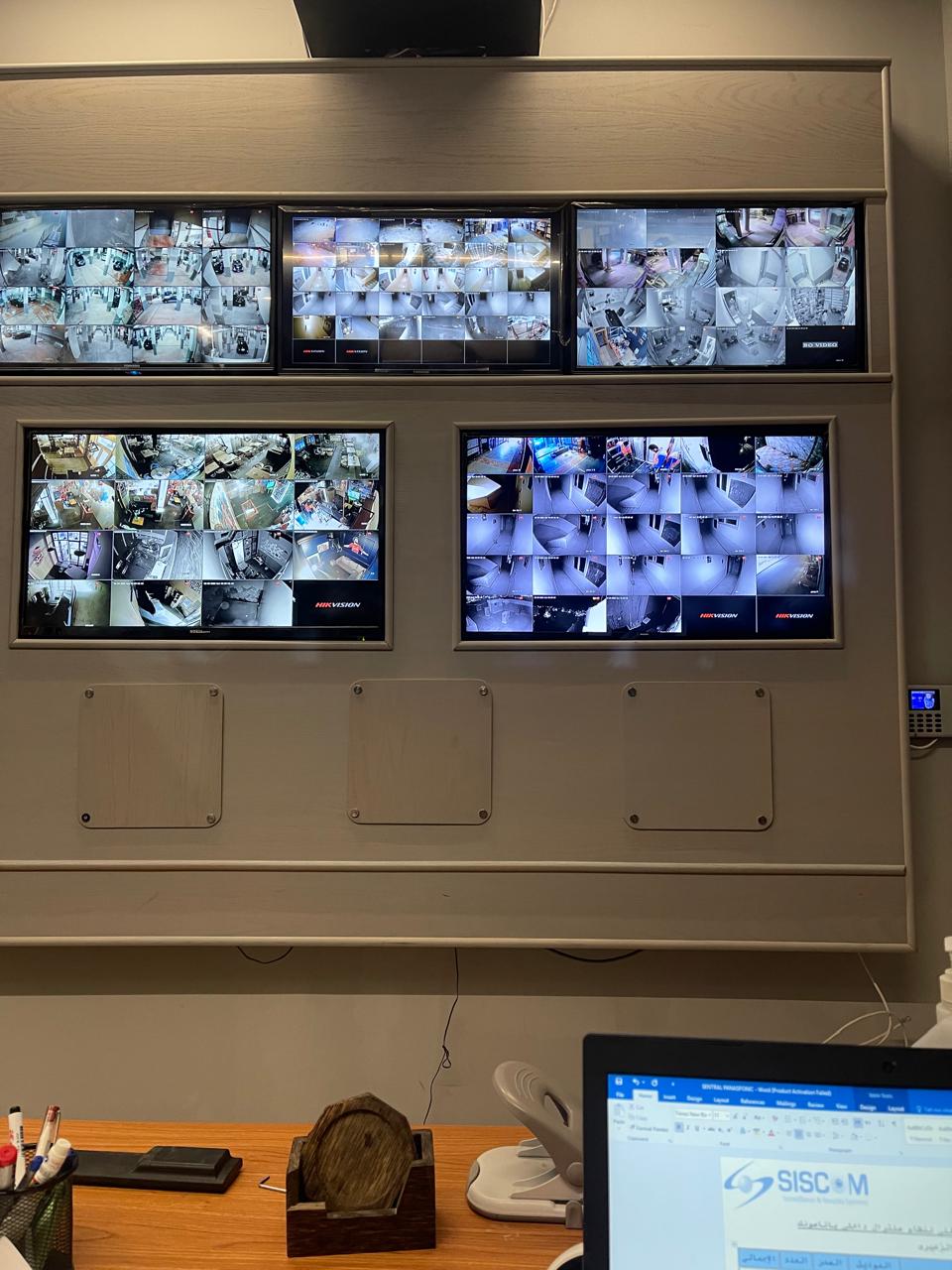
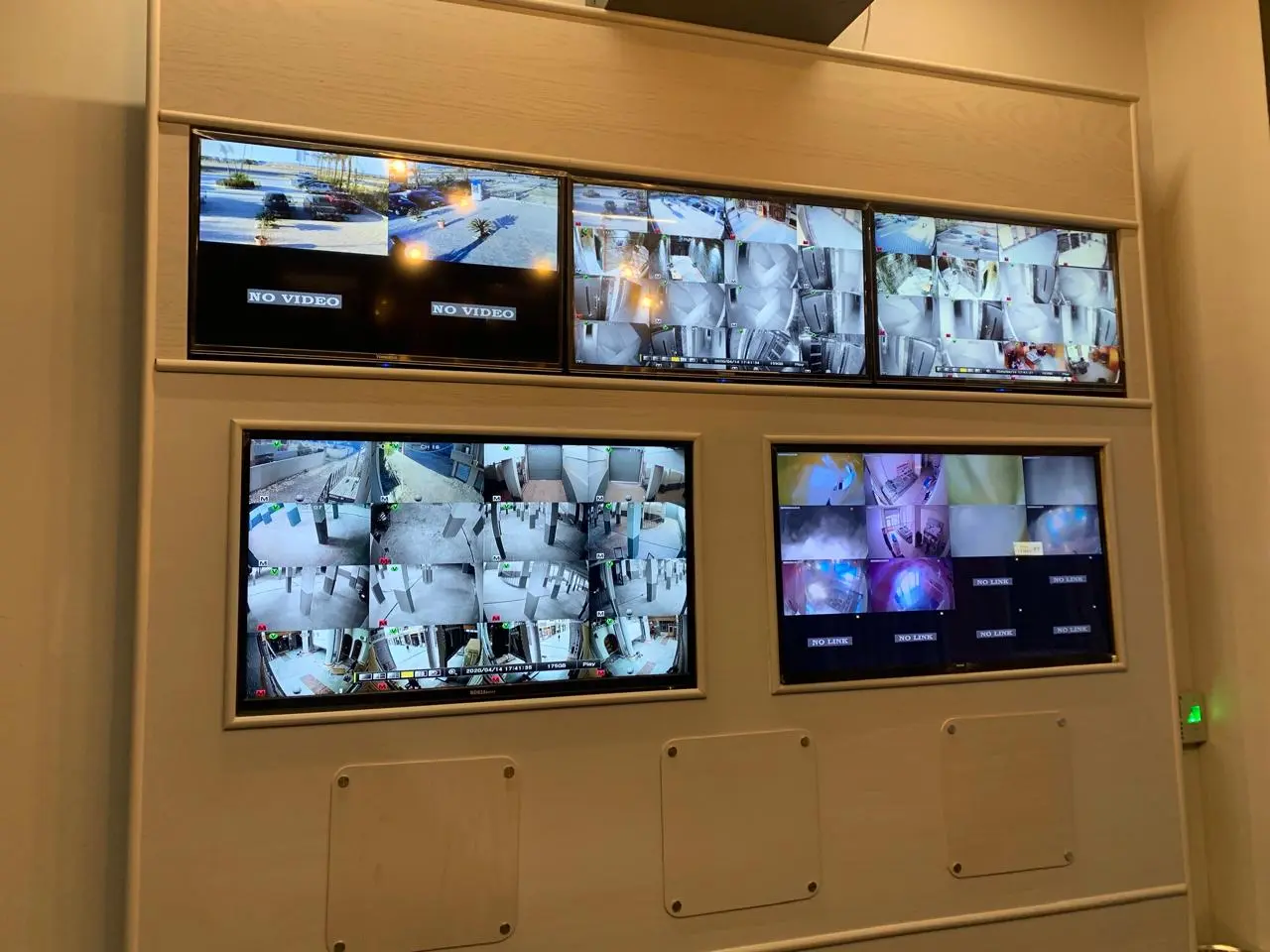
Selected installation photos from CCTV projects and site work.


CCTV System Design & Camera Placement
Camera placement should follow the purpose of each camera — not just the size of the property or a fixed camera count.
- Entrances and exits. Usually need coverage of both the approach and the door itself. Face-level framing is often needed if identification is the objective.
- Reception and circulation areas. Generally monitored for overall activity, footfall, and visitor flow.
- Warehouses, loading zones, and storage areas. Typically require wide-coverage cameras for overview and additional cameras for critical zones such as loading docks and high-value storage.
- Outdoor boundaries and exposed locations. Need weather-rated housings, appropriate IR range, and placement that accounts for changing lighting through the day.
- Lighting conditions. Reflections from glass, direct sunlight, and poor nighttime lighting are common causes of unusable footage. Placement should account for these.
- Mounting height, angle, and lens. Higher is not always better. The right height depends on the area to be seen and the level of detail required.
- General monitoring vs. identification. A wide overview shot cannot usually identify an individual. If identification is required, cameras must be placed closer, with the correct lens and lighting.
- Vehicle monitoring or license plate recognition. These have specific requirements for angle, distance, shutter speed, and lighting that differ from general surveillance.
Higher resolution alone does not guarantee usable identification footage. Lens selection, distance, viewing angle, lighting, image settings, and the intended objective all affect what a camera can realistically capture.
How a CCTV System Is Built
A CCTV system consists of several connected components. The design of each part affects image quality, storage duration, and long-term reliability.
Cameras
Type, resolution, lens, and IR range determine what can be seen and identified.
Recording & Storage
NVR or DVR plus drive capacity sized for the retention period.
Network & Cabling
Cabling, switches, and PoE. See networking solutions.
Monitoring & VMS
Live view, playback, and user permissions through VMS or recorder interface.
Access Control
Link CCTV with access control for door-event video pop-ups.
Maintenance
Periodic inspection and health monitoring. See maintenance contracts.
Technical Considerations
Two decisions shape a CCTV system more than any other: the technology used (IP or analog) and the storage capacity required for the intended retention period.
IP CCTV vs. Analog CCTV
The choice affects cabling, recording equipment, expandability, and integration options.
| Aspect | IP CCTV | Analog CCTV |
|---|---|---|
| Transmission & cabling | Ethernet (Cat5e/Cat6) | Coaxial cable |
| Recording equipment | NVR | DVR |
| Power | PoE on many models | Separate supply or central box |
| Existing infrastructure | Requires network planning and switch capacity | Can reuse existing coaxial cabling in some upgrades |
| Expansion | Scales with network and NVR channels | Limited by DVR channels |
| Cost & installation work | Varies by camera, NVR, and network requirements | Varies; can be lower when coax already exists |
| Typical fit | New installations requiring higher resolution, remote access, analytics | Upgrades where existing coax is in good condition |
Neither technology is automatically best for every property. The right choice depends on existing infrastructure, image quality requirements, expansion plans, integration requirements, and budget.
Recording Storage & Retention
A simplified planning formula for estimating storage capacity.
Illustrative estimate only — not a hardware specification. Actual requirements vary by bitrate fluctuation, resolution, frame rate, scene complexity, recording schedule, audio, recorder configuration, and usable drive capacity.
Installation Process
Every project follows a structured sequence — from site survey to handover.
Site Survey
Layout, lighting, entry points, and existing infrastructure.
System Design
Camera placement, lens selection, recorder sizing, storage, network layout.
Equipment Selection
Cameras, recorders, storage, and network components based on the design.
Installation
Mounting, cabling, configuration, and integration where required.
Testing & Commissioning
Image checks, playback testing, remote access validation.
Handover & Support
Documentation, operator briefing, post-installation support.
CCTV Installation & Commissioning Checklist
What should be verified after installation, before handover.
- Intended camera coverage and viewing angles match the design
- Daytime and nighttime image quality reviewed on all cameras
- No avoidable glare, reflections, or blind spots
- Recording, playback, date, and time settings verified
- Storage capacity checked against the required retention period
- Remote viewing tested (if included in the scope)
- Network connectivity and PoE capacity verified where applicable
- Power arrangements and any backup equipment confirmed
- User permissions and credentials configured appropriately
- Handover documentation provided to the customer
The final checklist depends on the installed equipment and the agreed project scope.
CCTV Installation Cost in Egypt — What Affects the Price
There is no single price for a CCTV system. The total cost depends on the site and the required functionality.
Cost Factors
- Number & Type of CamerasIP, dome, bullet, PTZ, or thermal cameras vary in cost. The number of cameras directly affects hardware and installation time.
- Storage & RetentionRequired retention period (for example, 30 or 60 days) determines hard drive capacity and recorder specifications.
- AI & AnalyticsFeatures such as facial detection, ANPR, or people counting may require specific camera models or more powerful recorders.
- Cabling & InfrastructureDistance between cameras and the recorder, cable routing, and the need for network switches or fiber affect the installation scope.
- Environmental ConditionsOutdoor, dusty, high-temperature, or hazardous areas may require specific IP ratings or specialized housings.
- Integration RequirementsIntegration with access control, barriers, or an existing VMS adds configuration work.
Information for a Quotation
- Property type — office, factory, warehouse, retail, compound, school, hospital, etc.
- Number of areas to monitor — approximate count of indoor and outdoor zones.
- Main entrances, exits, and outdoor locations that need coverage.
- Surveillance objectives — general overview, identification, vehicle monitoring, or a combination.
- Day and night requirements — whether night viewing is a priority in specific areas.
- Existing infrastructure — cabling, network equipment, and power availability.
- Required retention period — how long recorded footage must be kept.
- Remote viewing requirements — mobile or desktop access, and from where.
- Installation constraints — ceiling height, cable routes, access restrictions.
- Project type — new installation, expansion, or replacement.
A preliminary estimate may need revision after the technical assessment.
Facility Types We Serve
The required camera types, coverage depth, and reporting requirements vary by facility.
Factories
Production areas, loading zones, and perimeter monitoring with industrial-grade cameras.
Warehouses
Large aisles, dock areas, and yard coverage using PTZ and wide-angle cameras.
Hospitals
Entrances, corridors, pharmacies, and parking — with attention to privacy requirements.
Hotels
Corridors, back-of-house areas, and outdoor spaces with discreet dome cameras.
Schools
Campus entry points, corridors, and sports areas with centralized management.
Commercial Buildings
Office floors, parking garages, and lobbies with remote access for security teams.
Retail
Sales floors, entrances, and checkout areas with clear image requirements for review.
Residential Compounds
Entrance gates, perimeter, and common areas with residents' privacy considerations.
Technologies & Equipment
We supply and integrate equipment from established manufacturers such as Hikvision, Dahua, Axis Communications, Bosch Security, Honeywell, Uniview, ZKTeco, Grandstream, and FAAC. Product selection depends on the project requirements, and warranty terms follow each manufacturer's documentation.
Frequently Asked Questions
Direct answers to common questions about CCTV installation in Egypt.
There is no single price for CCTV installation. Cost depends on the number of cameras, camera type and resolution, required storage retention, cabling and network infrastructure, and any integration with access control. An accurate figure requires a site assessment, because placement, cabling distance, and civil works vary significantly between sites.
The number of cameras depends on the areas to be covered, the purpose of monitoring (general overview vs identification), the physical layout, and the required viewing angles. A camera count is determined after reviewing the site layout, entry points, and surveillance objectives — not from the property size alone.
Installation time depends on the number of cameras, cabling distance, site layout, and any civil works. Small single-building installations typically complete within 1–3 days. Larger multi-building or industrial sites may take several weeks. Timelines are confirmed after the site survey.
Remote viewing is possible when the recorder or NVR supports it and the site has an internet connection. It is configured using the manufacturer's mobile app or VMS. Requirements depend on the selected equipment and the network configuration at the site.
Neither technology is universally better. IP cameras offer higher resolution and support advanced analytics, but require network planning. Analog systems can reuse existing coaxial cabling. Selection depends on existing infrastructure, required image quality, expansion plans, and budget.
After installation, verify coverage against the design, daytime and nighttime image quality, recording and playback, date and time settings, storage capacity against the retention requirement, remote access (if included), network and PoE stability, user permissions, and handover documentation.
Most modern CCTV cameras include infrared (IR) illumination for low-light or night operation. The effective range depends on the camera model, lens, and ambient lighting. For critical outdoor areas, IR specifications and site lighting should be reviewed during the site survey.
Integration is possible when the access control system supports standard interfaces such as Wiegand, OSDP, or API. This allows video pop-up on door events and unified event logging. Compatibility is confirmed during the technical assessment.
SISCOM offers maintenance arrangements that can include periodic inspection, camera cleaning, firmware checks, and storage health monitoring. The exact scope and schedule are defined in the maintenance agreement.
Planning a CCTV Installation Project?
Share your site requirements with SISCOM Smart Solutions to discuss the appropriate CCTV system design and installation scope.